Whats more plausible—Vampires or Big Foot?
This is one of those trivial questions, a non-sequitor, but as humans we can reason about the plausibility of each. This is what makes us unique, what makes us powerful.
As a product leader, there isn’t a day I don’t think about experiences, from digital to physical, from architectural to hygge and how it impacts the human experience.
Where I differ from many product leaders, is I belive product success is not found within the product. It’s not an inherent attribute like a value prop—but at the intersection of the product attribute and the human experience. What this means is products exist and are evaluated through culture.
A product does break through on its own merits, it must work within or change culture to succeed. Salesforce which pioneered SaaS, software that was accessed through the web brower as opposed through a destop or server application, needed to first convince the world that No Software was valuable before being accepted as a product—it sold through the sales leader, because the CIO suite was not willing to accept data living through the cloud.
Overtime Salesforce defined the CRM industry. What changed was not the product, though certainly that improved, but what changed, in part through “no software” category design was the culture of the C-Suite, and of IT departments. It became acceptable, and welcome to use SaaS products.
One of the things that most stood out to me from the book Guns, Germs and Steele by Jared Diamond is the observation that “… societies differ in their receptivity to new technology.”
In America, you can see this today—through technological innovation we have advanced family planning tools and yet through a combination of culture and legislation—their adoption is not only slowed but limited. Similarly, cryptocurrencies, a product with dubious value were widely adopted from 2018-2022 in large part due to their cultural acceptance.
Technology capabilities can certainly foster, and inhibit product adoption but culture is so powerful it can buttress flawed products into mass adoption, and inhibit the adoption of effective solutions.
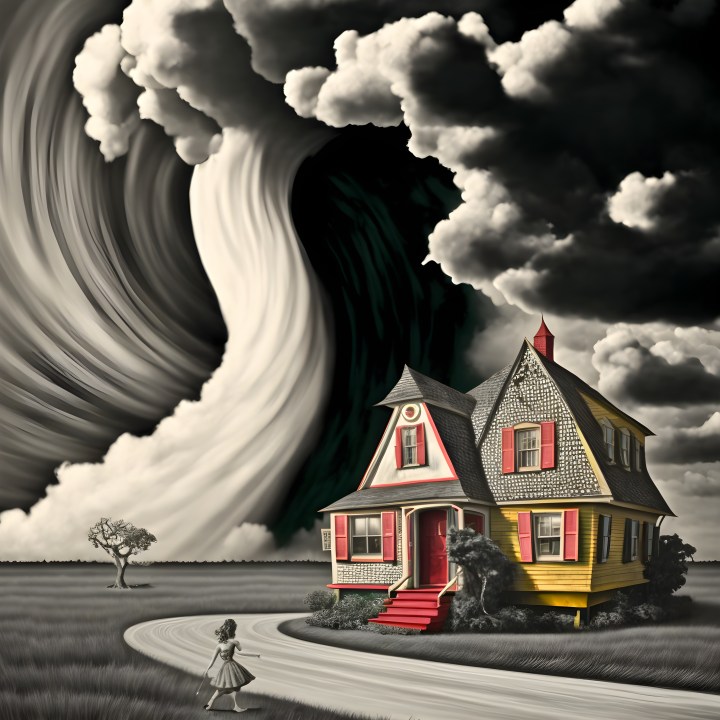
I don’t dream in black and white, meaning I don’t dream about products, being wealthy, or other “states”
When I dream about the future—I dream in technicolor. I imagine cultures. I imagine the culture that could be—the culture that must exist for a better world.
And I act, teach, and meditate according to that culture—and just like that it is so. At least in my bubble.
And you my friend, are welcome to do the same.
People who grew up in the era of black and white television report dreaming in black and white—it could say, the ability to dream in color was stymied by technology until it was once again unblocked by technilogical progress.
 Mikal-El